Fixing a Burnt Outlet, Fast
A scorched or discoloured power point didn't get that way overnight. Something behind the faceplate has been running hotter than it should, and the outlet itself is showing the evidence.
Stop using it immediately, even if it still seems to work.
If you can smell burning, see melted plastic, or feel real heat on the faceplate, call (02) 9134 9026 now.
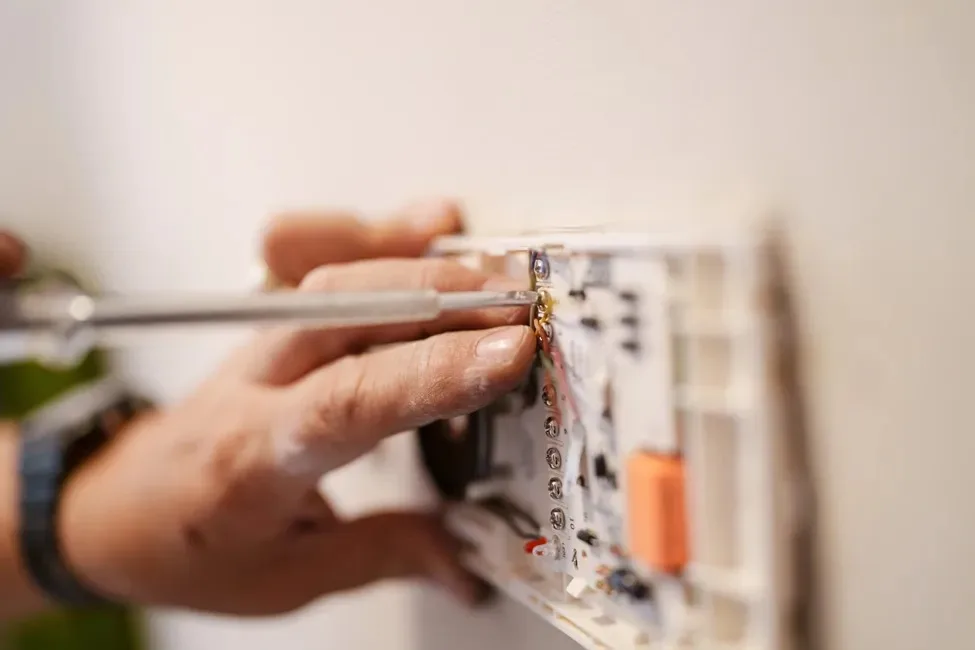
What Is Going On Behind the Wall
A power point carries current through a set of screw or spring terminals inside the wall. Any of those can loosen over years of plugging and unplugging, vibration or simple age.
A loose terminal creates resistance, and resistance generates heat right at that connection point.
Enough heat, sustained for long enough, discolours or melts the plastic housing around it, which is the scorching you're seeing on the faceplate.
A high-draw appliance, like a heater or an old fridge, plugged in regularly can accelerate that process, since it pushes more current through an already marginal connection.
Once a point has scorched, the damage doesn't reverse itself. The terminal underneath needs proper attention, not just a new faceplate.
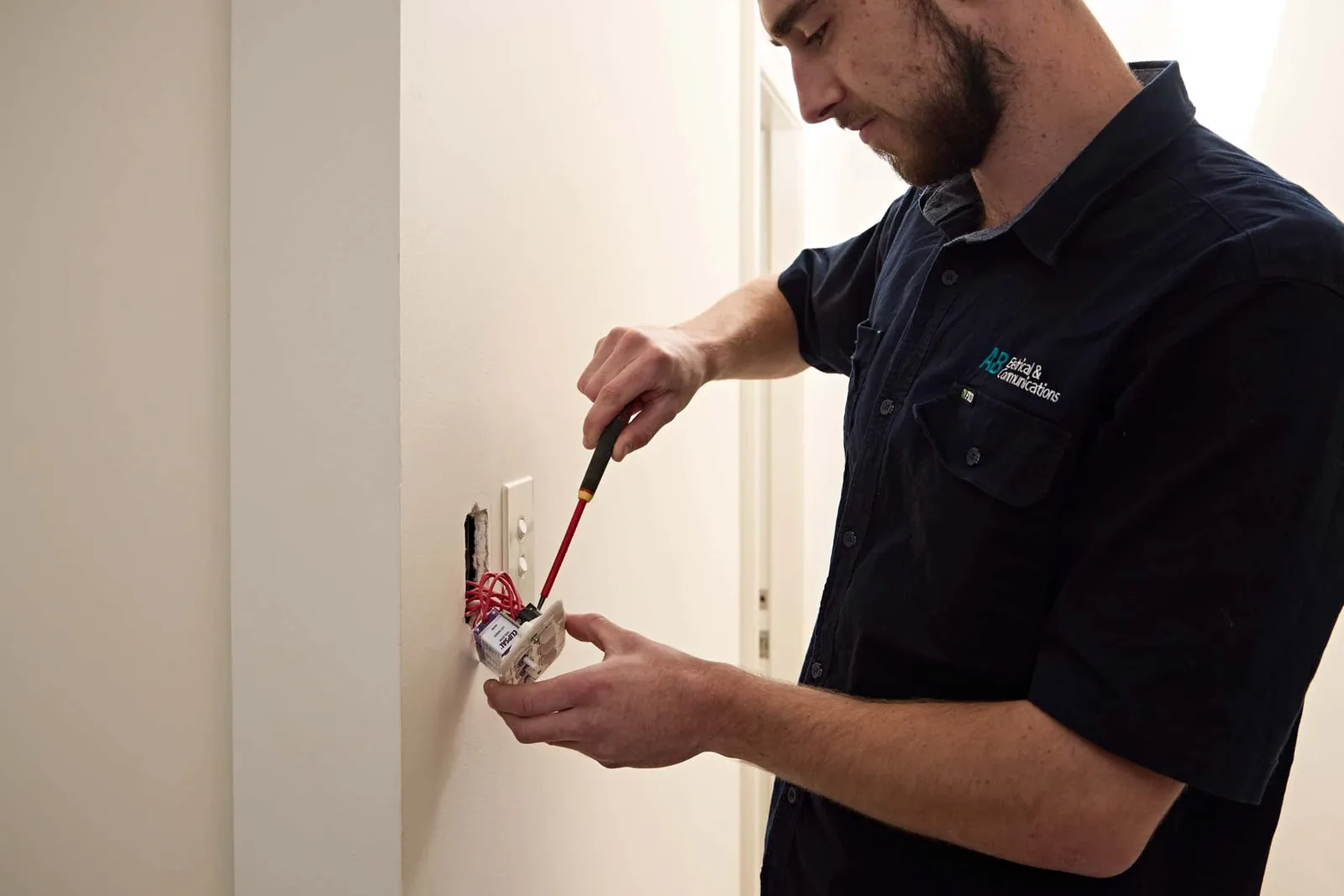
Common Causes of a Burnt Outlet
The list below runs from what we see weekly to what we see once in a while:
- A loose terminal screw inside the point. The single most common cause, worsened by age and vibration.
- A high-draw appliance run regularly from that point. Heaters and older appliances push more current than a light load.
- A point that's simply reached the end of its working life. Plastic housing and internal springs both weaken with decades of plugging in and out.
- A double-adapter or power board overloading the point. Stacking too many devices on one outlet builds heat faster.
- Corrosion at the connection. Less common, but moisture exposure over time can build resistance at the terminal.
- A wiring fault behind the wall. Rare, but a damaged cable feeding the point can be the true source.
When a Burnt Outlet Is Urgent
Any visible scorching or melted plastic on a power point is already past the point of waiting, so treat it as urgent, not routine.
A faceplate that's warm or hot to touch, or any hint of scorched plastic in the air, both push this straight into the urgent category.
Sparking when you plug something in, or a point that's discoloured but cool with no smell, still needs an urgent look even without the more dramatic signs.
Don't wait to see if it settles down on its own. Plastic marked by heat once will keep taking on more damage, not less, the longer that connection stays live.
The safest immediate step is simple: leave that outlet alone and, if you can work out which breaker feeds it, flip that one off at the board.
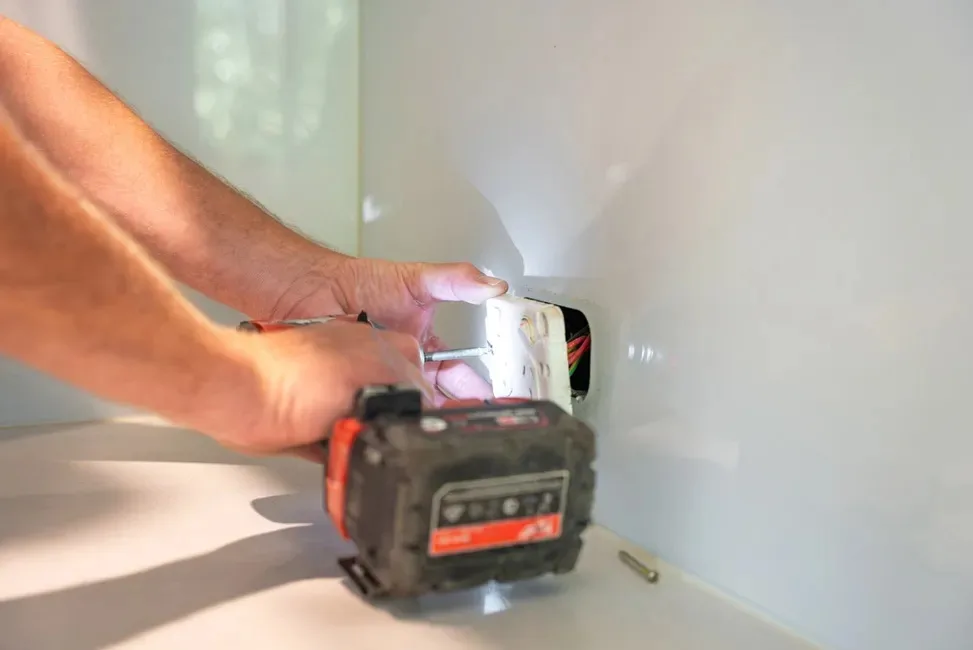
Do This First
- Leave the damaged point alone. Don't plug anything else into it while you wait.
- Find which breaker feeds that point and switch it off, only if you can identify it without guesswork.
- Check the other points it shares a circuit with for warmth or discolouration, without touching bare wiring.
- Call us straight away, especially with any smell, heat or visible melting involved.
How We Fix the Fault for Good
First job on site is killing power to that circuit, well before anyone touches the faceplate.
From there the point comes apart so the terminal gets a proper look rather than a verdict called from how the faceplate looks on the outside.
Heat-damaged wiring behind the point is cut back and replaced rather than left in place under a new fitting.
Other outlets on the same run get a quick check too. A scorched point is sometimes the visible end of a problem that started somewhere else on the circuit.
Once the job's notifiable, a Certificate of Compliance follows so you've got it in writing against AS/NZS 3000.
Why Leichhardt's Housing Makes This Common
Leichhardt's heritage-listed terraces went up on narrow double-brick lots, fitted out with power points sized for whatever a household actually needed back then.
Kitchens back then ran a fraction of the appliances a modern household plugs in daily, from air fryers to induction cooktops to charging stations.
Original points retrofitted into older terrace walls, rather than installed as part of a full rewire, are more likely to carry connections that were never sized for that modern load, which is exactly the kind of gradual overheating that ends in a scorched faceplate.
How to Stop It Happening Again
A few practical changes cut the risk of the next outlet overheating:
- Spreading heavy appliances across more points, rather than relying on one outlet for everything.
- Swapping out older, worn power points before they show visible damage, not after.
- Avoiding stacked double-adapters on any single outlet, especially for higher-draw appliances.
- A once-over on points and circuits if the home's gone years without anyone checking them, something our team folds into a routine electrical repairs callout.
Related Faults and Surrounding Areas
If the smell of burning isn't clearly coming from one point, it's worth reading the broader page on burnt smells instead. Where the same outlet also knocks the breaker out rather than just discolouring, that's the pattern our breaker keeps tripping guide walks through.
Annandale, Rozelle and Lilyfield fall within our usual coverage alongside Leichhardt, so we're rarely far from wherever you're calling from.

Call Us Today, We Will Sort It
Ignoring a scorched power point doesn't make it safer, it just gives the damage more time to spread underneath. Ring (02) 9134 9026 and we'll isolate it and get it repaired properly.
Common questions
Your Burnt Outlet FAQs
Straight answers on what a burnt power point means and what happens next.
Is a burnt power point an emergency?
Visible scorching, melted plastic or a hot faceplate counts as urgent, yes. That outlet has already been generating enough heat to damage itself, and continued use risks it getting worse.
Do I get paperwork once it's fixed?
For notifiable work, yes. NSW Fair Trading gets a Certificate of Compliance lodged against the job, which is your record the repair meets AS/NZS 3000.
What's involved in tracking down a burnt point?
The circuit gets isolated first, then we open the point up and look at the terminal and wiring behind it, plus anything else sharing that circuit in case the damage runs wider than the one outlet.
Is it safe to use other points on the same circuit?
Generally yes, as long as they're not showing warmth or discolouration themselves. It's the damaged point specifically that needs to stay switched off and unused until we've been.
Would a breaker board have stopped this happening?
Possibly. Modern breakers trip faster on a developing fault than older ceramic fuses do, which means less time for a loose connection to build up heat before the power actually cuts.
Is this a same-visit fix?
Usually, yes, for a straightforward point swap. If the heat damage has spread into the wall cavity, we'll say so on site and talk through timing before starting anything.